
Lingda Laboratory
Current
Certificate of Analysis · Skin / Cosmetic
AHK-Cu
Independently verified
Third-party HPLC analysis · Lingda Laboratory
- Measured purity
- 99.62%
- Test date
- 6 Oct 2026
- Report no.
- #YLBP20261292
- Molecular weight
- 354.40 Da (free tripeptide); ~418 Da as the copper(II) complex
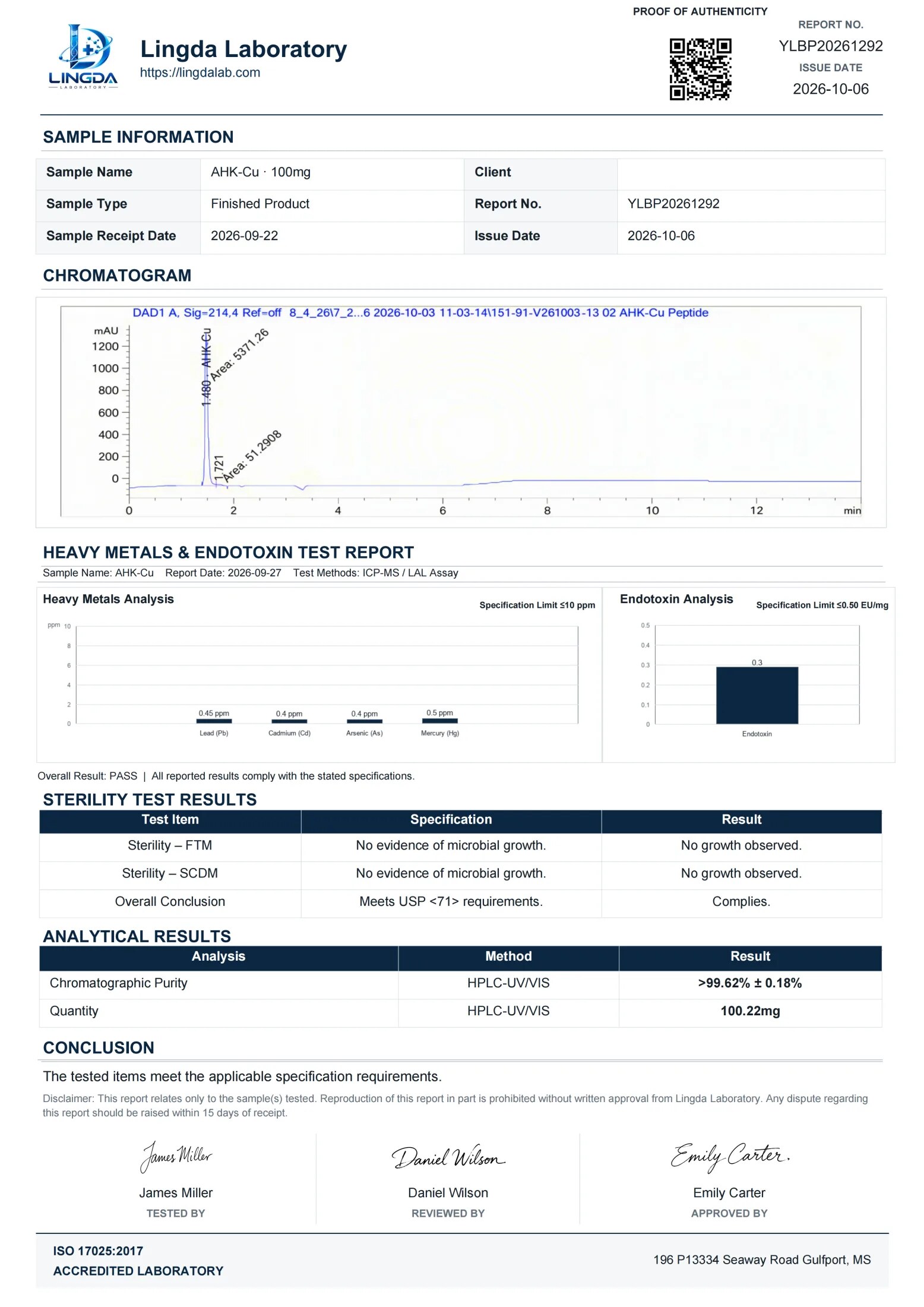
Published certificate
What this certificate shows
Yes — a Certificate of Analysis is published for AHK-Cu. A Certificate of Analysis reports what one laboratory measured in one submitted sample on the test date shown on the report.
- Laboratory
- Lingda Laboratory
- Report number
- YLBP20261292
- Test date
- Measured result
- 99.62% purity (as reported)
- Sale lot
- Sale lot not stated
The public record does not state which sale lot that sample came from, so a certificate shows the measured result for the sample analysed, not the composition of a particular vial or order.
Where a report states a purity, the method and any identity result are on the report itself. A purity figure on its own does not confirm identity, sterility, endotoxin content or any biological property. See how to read a Certificate of Analysis and what a COA cannot tell you.
Certificates on this page are issued by independent third-party laboratories (the report names which). Questions about a certificate? Email hello@new-u.io with your order reference. For laboratory research use only; not for human consumption.
About AHK-Cu
The compound this certificate belongs to, its research guide, and how to read the analysis. Analytical testing describes the material in the vial; it does not validate any published research finding.
- Research guideAHK-Cu research guideAHK-Cu binds copper(II) through its central histidine imidazole and delivers it to cells.
- Related researchHow to read a Certificate of AnalysisWhat HPLC purity, identity and the report fields mean — and what a certificate does not tell you.
- Research areaSkin & cosmetic researchThe dermatological and cosmetic research area - copper, melanocortin and signal peptides studied in skin remodelling, pigmentation and…